
The Psychology That Drives Auction Success
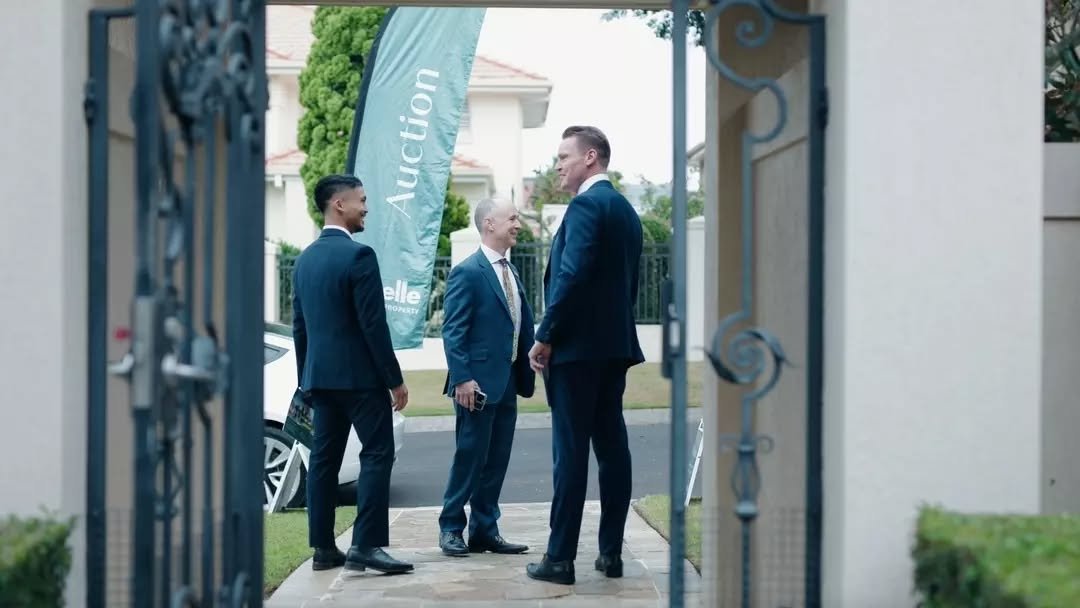
Why Buyers Bid Confidently and Sellers Win
When a home goes to auction, something changes. The same buyers who might “think about it” in a private treaty campaign suddenly act with speed, certainty, and, often with more confidence in their price.
That’s not luck. It’s psychology.
At Holmes & Co, we see it every week: auctions don’t just sell property, they activate human decision-making in a way private treaty rarely can. Here’s what drives both buyers and sellers into the auction arena and why, psychologically, auction is often the stronger method for residential property.
Why buyers get drawn into auctions
1) Social proof: “If others want it, it must be worth it”
Humans use other people’s behaviour as a shortcut for value, especially when the stakes are high (like buying a home). An auction makes demand visible: bidder numbers, competing offers, rising bids.
That public competition doesn’t just reflect value; it creates perceived value in the moment.
Research backs this up: a study on “auction fever” found that social competition is a key driver behind higher bids, and that arousal rises under time pressure, leading to higher bidding in ascending auctions when people face human opponents.
Private treaty contrast: In a private sale, buyers rarely see competition. They suspect it, but they don’t feel it. That reduces urgency and emotional commitment.
2) Time pressure: deadlines beat procrastination
Most buyers don’t delay because they don’t like a property, they delay because uncertainty is uncomfortable. Auctions replace fuzzy timelines with a clear finish line.
And that matters. Time pressure has been shown to increase bidder arousal, which (in the right context) lifts bids.
Private treaty contrast: Without a fixed deadline, buyers can “wait and see,” keep browsing, or try to negotiate slowly, often pushing the campaign into weeks of back-and-forth.
3) Commitment and momentum: once you’re in, you want to win
A buyer who has:
attended inspections,
reviewed contracts,
organised finance,
and registered to bid
has psychologically “invested” in the outcome.
In behavioural terms, sunk effort increases follow-through. At auction, that momentum is reinforced publicly with each bid.
Private treaty contrast: The negotiation process lets buyers re-open doubts at every step: “What if we offer less?” “What if the vendor says no?” “What if something better comes up?”
4) Loss aversion: missing out hurts more than paying more
People are generally more motivated to avoid a loss than to secure an equivalent gain. In auctions, the “loss” is immediate and public: the home is about to be gone.
This is why auctions often produce stronger buyer action than private treaty: buyers don’t just bid for a home, they bid to avoid regret.
Why sellers choose auctions
1) Sellers don’t just want a price - they want certainty
Auctions appeal to a powerful seller psychology: control and closure.
A defined campaign period
A defined decision day
A defined market test
For many vendors, reducing uncertainty is worth as much as squeezing an extra few weeks of negotiation.
2) Transparency reduces “deal fatigue”
Private treaty can feel like a maze: conditional offers, long finance clauses, opaque “another buyer is interested” conversations, slow counters.
Auctions are transparent: buyers compete in the open, terms are clear, and the process is designed to convert interest into commitment.
3) Competition is the seller’s best friend - and auctions manufacture it
From a seller’s perspective, the most valuable ingredient is not the number of clicks online, it’s competitive tension (two or more motivated buyers at the same time).
Large-scale housing auction data shows that more competition changes bidding behaviour: in auctions with more bidders, individuals tend to show a larger spread between their first and last bid, and repeat bidders often increase their maximum bid after being unsuccessful previously.
That is pure psychology in action: persistence, rivalry, and the drive to “not miss out again.”
Do auctions really outperform private treaty?
Academic evidence: auction premiums exist (especially for houses)
A major Australian study using a hedonic pricing model across five capital cities found that houses sold via auction achieve higher selling prices than private treaty, even after controlling for self-selection (i.e., the type of property more likely to go to auction).
It also notes the effect can vary by property type (units behave differently in some markets), which is exactly what good campaign strategy should acknowledge.
Market evidence: auction medians are often higher
Domain’s research comparing median sold prices reported that in 2021, median prices at auction were higher than private treaty across capital cities, including a 63% higher median for Sydney houses (auction vs private treaty), alongside notable differences in other cities.
Important note: medians don’t “prove” causation on their own (property mix matters), but they do align with what behavioural research predicts: auctions concentrate demand and force decisions.
Why auction psychology beats private treaty psychology
Private treaty is built for negotiation. Auctions are built for decision-making.
Private treaty creates a comfortable environment for buyers:
They can move slowly
They can test low offers
They can wait for reassurance
They can keep options open
Auction creates a decisive environment:
A deadline compresses time
Competition becomes real, not hypothetical
Social pressure reinforces commitment
Transparency builds confidence to act
And when humans feel confident, they act faster and often pay closer to their true limit.
When auction is especially powerful
At Holmes & Co, auction campaigns tend to perform best when:
the property has broad appeal (family homes, popular school zones, lifestyle suburbs)
there’s scarcity (limited comparable stock)
marketing can build a crowd (strong presentation + concentrated promotion)
buyers will compete emotionally (unique features, “dream home” factor)
And even for more niche homes, auction can still be the best method if the campaign is designed to create enough competitive tension because tension is the engine.
The Holmes & Co approach: using psychology ethically
The goal isn’t to “trick” anyone. The goal is to structure a fair process that helps serious buyers make a clear decision, while giving sellers the best chance of a premium outcome.
Done properly, auctions:
reward preparation,
reveal the true market price in real time,
and reduce the drawn-out uncertainty that frustrates both sides.
FAQs
Are auctions only good in booming markets?
Not only. In softer markets, auctions can still work because they compress decision-making and surface the best buyer (if there is one) quickly. Strategy matters more than the headline market cycle.
Do auctions always get a higher price?
While property type, location, and buyer depth matter. The psychological mechanisms that lift outcomes (competition + urgency + transparency) are real, measurable, and repeatedly observed.
Isn’t private treaty more “comfortable” for buyers?
Yes and that’s exactly why it can underperform for sellers. Comfort often leads to delays, discounts, and deal fatigue.
An agents strategy – weighing up auction vs private treaty
If you are an agent just embarking on an auction sales method, Holmes & Co can help you assess:
likely buyer depth
local demand signals
the property’s emotional vs analytical appeal
and which campaign structure will create the strongest competitive tension
Because the best sale method isn’t just about marketing, it’s about how people make decisions under pressure.